
Insulated plasterboard
Plasterboard bonded to a rigid insulation board, fixed to the wall and finished with a skim coat. It performs well for its thickness and is quick to fit.
Home / Services / Loft & Insulation Solutions / Internal Wall Insulation
Internal wall insulation lines the inside face of your outside walls, keeping more heat in rooms that have solid brick or stone walls with no cavity to fill.
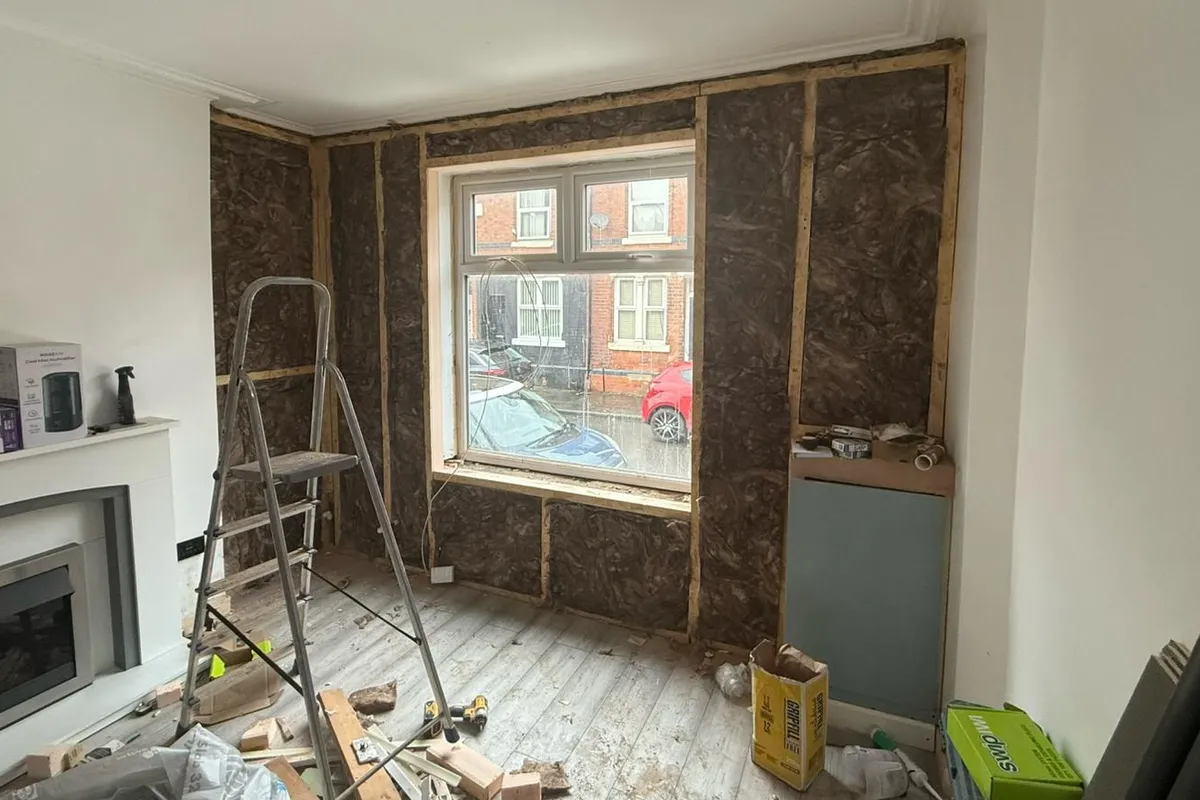
Homes built before about the 1920s usually have solid walls: a single thick layer of brick or stone with no gap to fill. Solid walls lose heat much faster than insulated cavity walls, which is why rooms in Victorian and Edwardian houses can feel chilly even with the heating on. Internal wall insulation adds a layer of insulation to the inside face of those outside walls, finished with plaster so the room looks as it did before.
It is often the right choice when the front of the house cannot change, for example in a conservation area, on a period terrace with decorative brickwork, or where external insulation would cause problems at the boundary. Because the work is carried out room by room, you can insulate the coldest rooms first or tie it in with a redecoration you already have planned.
Insulating a solid wall from the inside changes how moisture moves through it, so the design has to be right. We check for existing damp, choose a system that suits the wall, and seal the warm side with a vapour control layer where the system needs one. We work in homes across Bedfordshire and nearby, and some eligible households may be able to get help with the cost through government schemes.
Plasterboard bonded to a rigid insulation board, fixed to the wall and finished with a skim coat. It performs well for its thickness and is quick to fit.
A timber or metal frame is fixed against the wall, filled with insulation and boarded. It suits uneven walls and leaves space to run cables.
Thin thermal lining boards suit rooms where space is tight, giving a warmer wall surface with very little loss of floor area.
Thin high-performance boards go around window reveals and at wall junctions to reduce cold bridges, where condensation and mould tend to show first.
A vapour control layer or sealed foil-backed board on the room side keeps warm, moist air away from the cold masonry behind the insulation.
Skirting boards, window boards, radiators and sockets are taken off and refitted on the new wall face. Electrical work is carried out by competent, qualified electricians with certification provided where applicable.
Draughty bays and individual cold rooms can be insulated on their own when a whole-house job is not practical.
The insulated surface heats up quickly when the heating comes on, so rooms reach a comfortable temperature sooner and hold it for longer.
The outside of your home stays exactly as it is, which matters for period features and conservation areas.
Properly detailed insulation raises the temperature of the wall surface, reducing the cold patches where black mould often starts.
The work can be phased to suit your budget and the way you use the house.
When you insulate a solid wall on the inside, the masonry behind the insulation becomes colder than it was. If warm, humid air from the room can reach that cold surface, it condenses inside the wall where you cannot see it. This hidden moisture, known as interstitial condensation, can lead to mould behind the boards and decay in timber joist ends built into the wall.
The usual answer is a vapour control layer on the warm side of the insulation, taped at joints and sealed around sockets and edges, or an insulated board with a foil facing that does the same job. On older walls laid in lime, a breathable system may be the safer option because it lets the wall dry out in both directions. Either way, good ventilation in the room still matters, especially in kitchens and bathrooms.
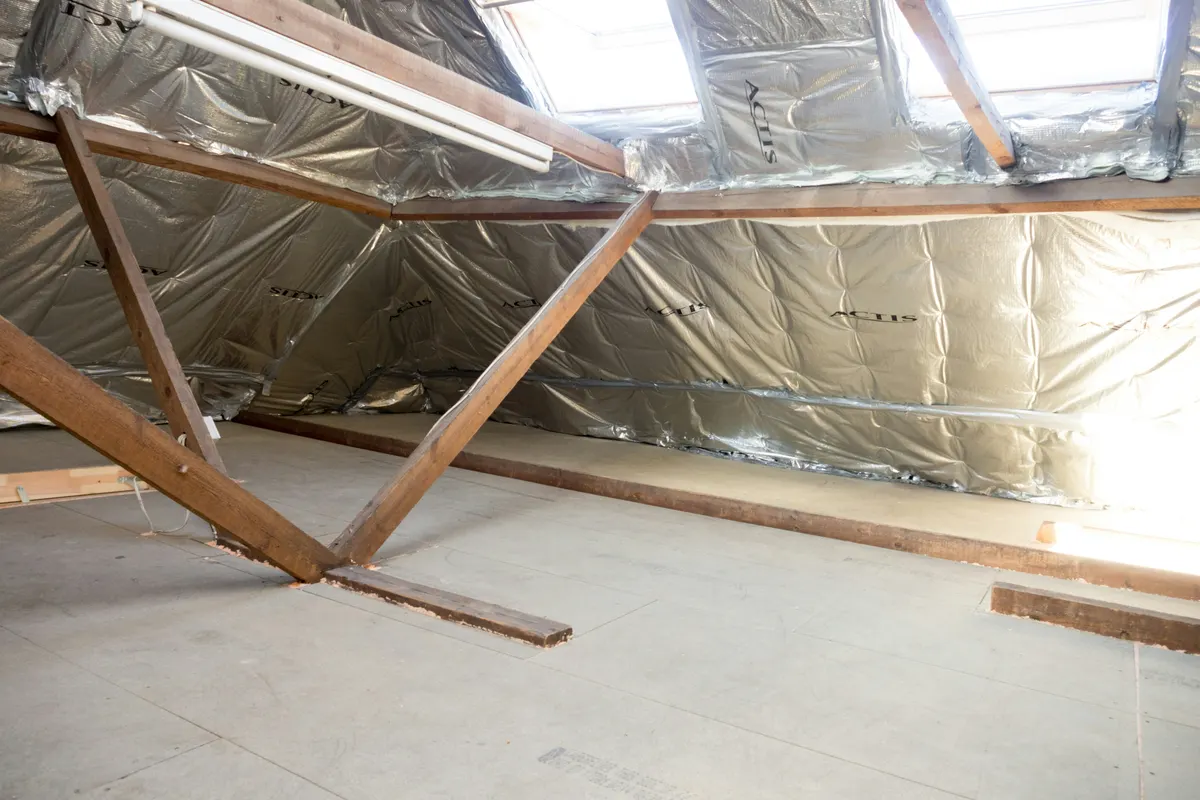
That depends on the system and the performance you need. Insulated plasterboard is the slimmest common option, while a stud wall with insulation takes up more depth but copes better with walls that are out of true. In a typical room the change shows on a tape measure but is rarely noticed once furniture is back in place.
Approved Document L of the Building Regulations sets a U-value of 0.30 W/m²K for walls being insulated, but it allows a lower standard where meeting it in full would not be technically, functionally or economically reasonable, for example where it would take too much space from a small room. We explain the options for each wall before work begins.
Measure the wall depth at a window or door reveal: below roughly 260mm, it is probably solid. Brickwork with alternating long and short brick faces is another clue, and our survey confirms it.
Yes. We work on one room or a few rooms at a time and keep dust contained, though the rooms being worked on will be out of use for a few days.
Yes, with the right fixings. Heavy items need fixings that reach the masonry or timber battens added during installation, so tell us beforehand where you plan to put them.
External insulation keeps all your room space and deals with cold bridges at floor level more easily, but it changes the look of the house and may need planning permission. Internal insulation leaves the outside untouched and can be done in stages.
In most cases, yes. Insulating an external wall counts as renovating a thermal element, so the work has to meet the energy efficiency rules and be notified to building control.
Tell us a little about your property and the work you need. Add a few photos if you can, it helps us give you an accurate price sooner.
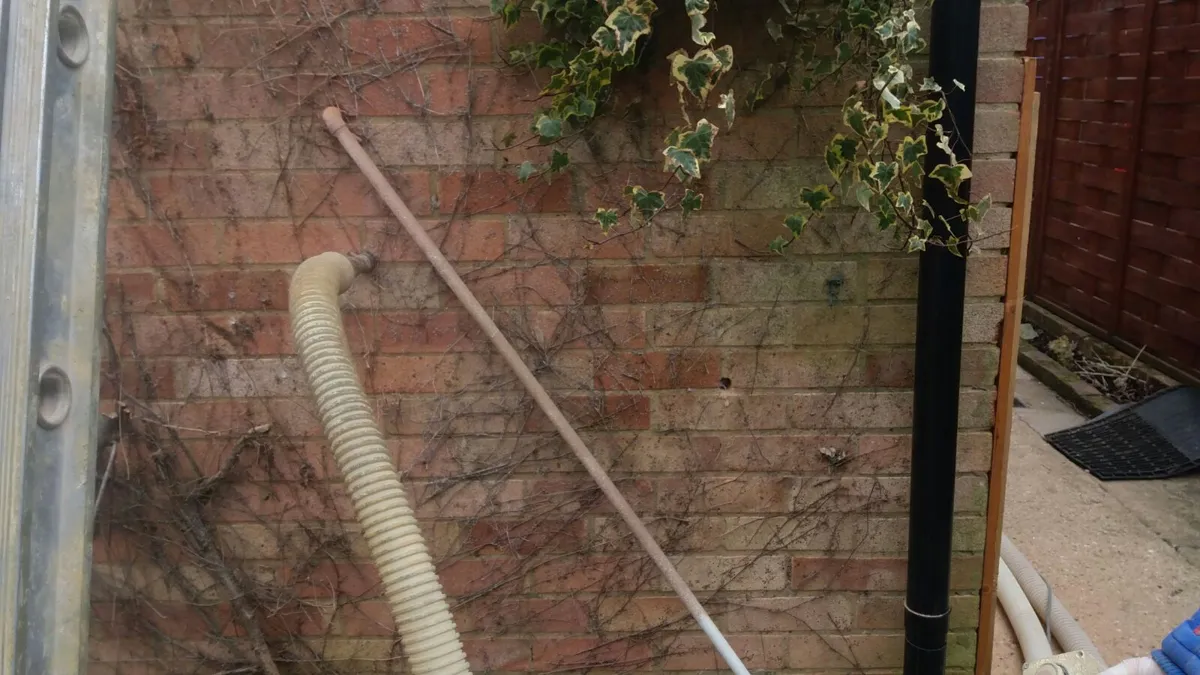
Empty cavity walls let heat straight out. We survey your walls for suitability, inject blown mineral wool from outside, then fill and match the drill holes.
Learn more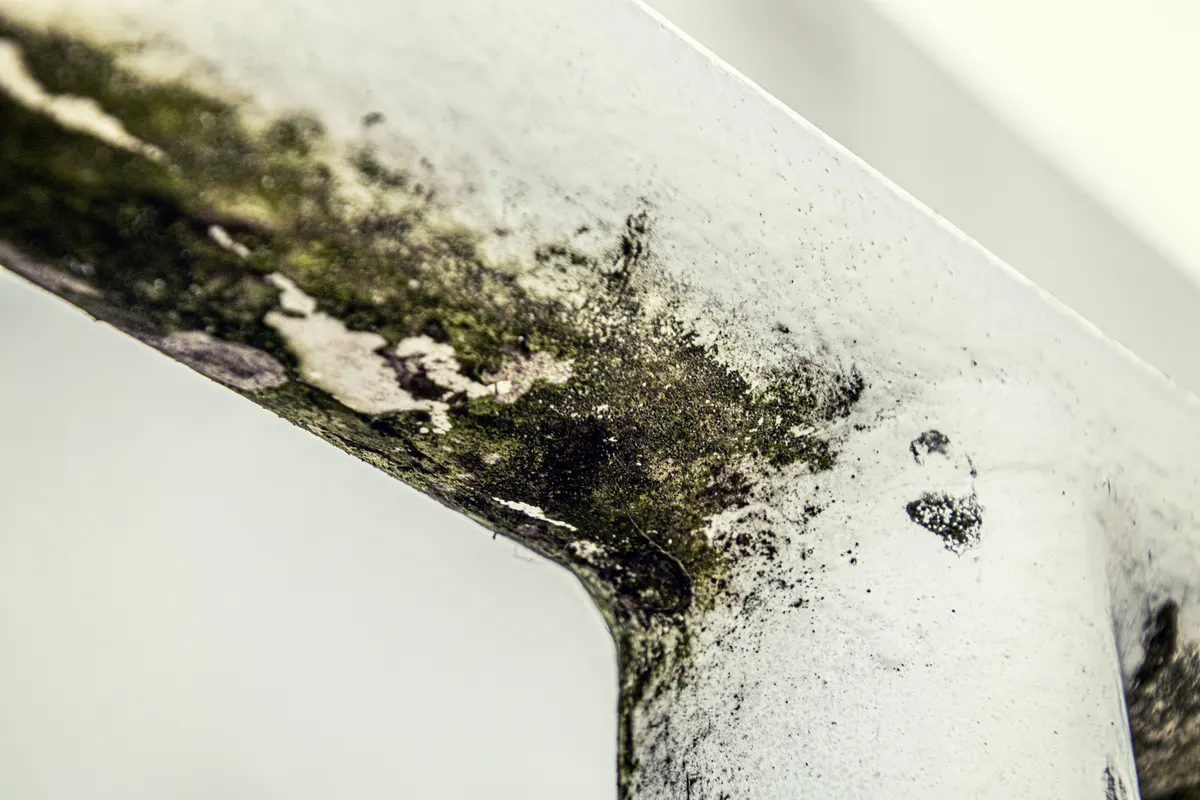
Black mould removed, condensation and damp investigated, then ventilation, extractor fans, PIV and anti-mould coatings fitted so the problem stops coming back.
Learn more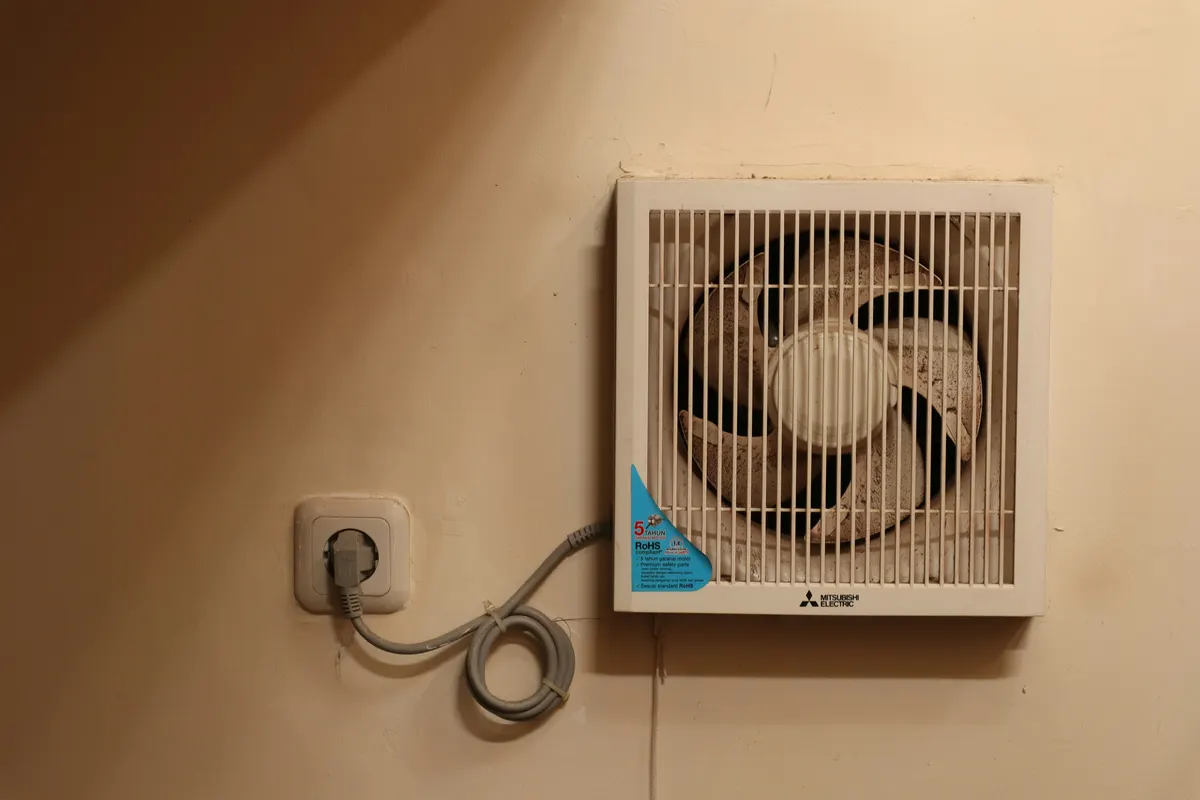
Humidistat, continuous running and kitchen extractor fans plus loft-mounted Positive Input Ventilation, sized to Approved Document F to clear steam and stop condensation.
Learn moreEcoBuild Contractors
Chat with us on WhatsApp
Hi there 👋
Send us a message or a few photos of the job and we will come back to you with a free quote.
We value your privacy
We use cookies to make this website work. With your consent we also use analytics cookies to see how people use the site, and advertising cookies to measure our ads. You can accept all, reject all or choose which ones to allow, and change your mind at any time. Cookie policy
Privacy preference centre
Choose which cookies we can use. Strictly necessary cookies are always on because the site cannot work without them. Your choice is saved on this device.
Remember your cookie choice. No tracking.
Google Analytics counts visits and shows which pages help people, so we can improve the site.
Google Ads measures whether our adverts lead to enquiries. Only used if you allow it.