
Warm flat roof insulation
Rigid insulation boards are laid over a vapour control layer on the deck, then covered by the new waterproof layer.
Home / Services / Loft & Insulation Solutions / Flat Roof Insulation
Flat roof insulation keeps heat in extensions, garages, dormers and kitchens under flat roofs, which are often the coldest rooms in the house. We recommend the build-up that suits your roof.
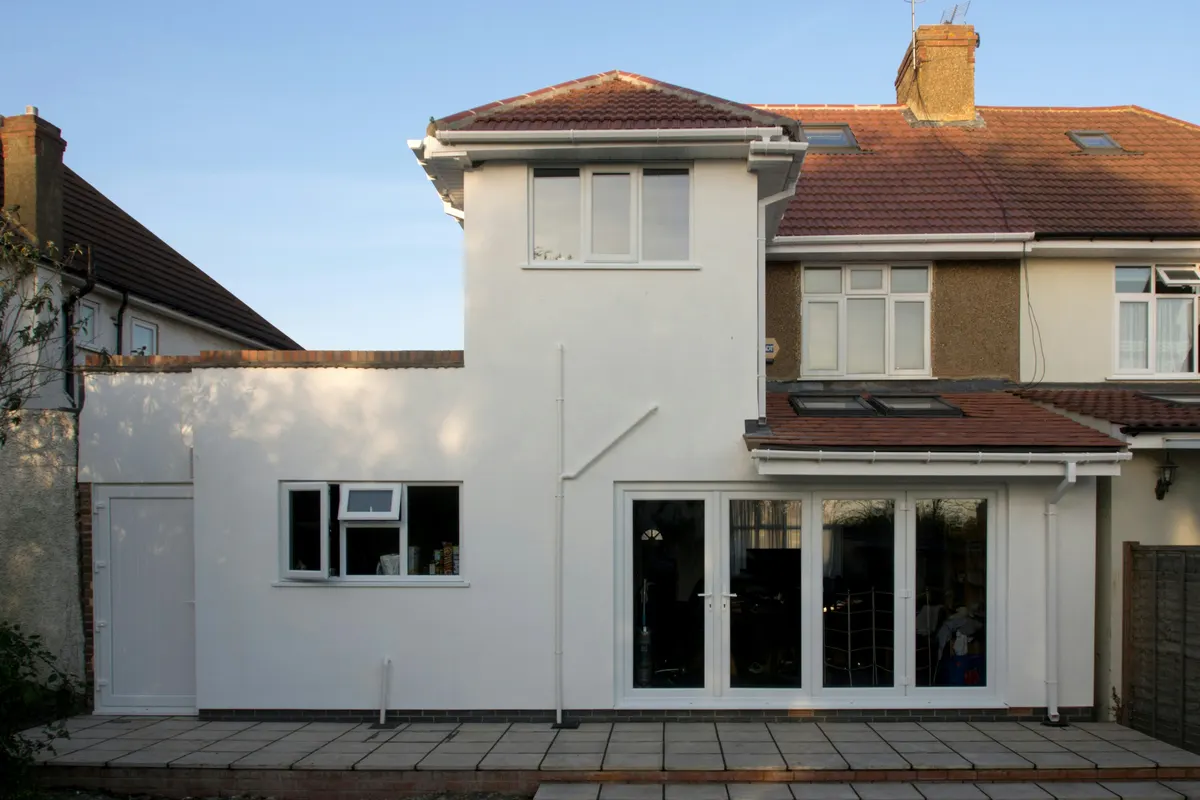
Rear extensions, garage conversions, dormers and bay windows often have flat roofs, and many were built with little or no insulation. Because a flat roof sits directly above the ceiling, a poorly insulated one leaves the room below cold in winter and hot in summer. Flat roof insulation is usually best done when the covering is due for replacement, so the insulation and the new waterproofing can be designed together.
There are three ways to insulate a flat roof. A warm deck puts the insulation above the roof deck, under the waterproofing. A cold deck puts it between the joists, below the deck. An inverted roof puts it on top of the waterproofing, held down with ballast. Each has its place, but for most homes a warm deck is the most reliable choice because it keeps the timber structure on the warm side.
Before recommending anything, we look at the condition of the deck and joists, the height available at door thresholds and walls, and how water drains off the roof. We work on homes and commercial buildings across Bedfordshire and nearby, and quotations are free and without obligation. If the roof is close to needing a new covering anyway, we will tell you, so the insulation can be planned in at the right time.
Rigid insulation boards are laid over a vapour control layer on the deck, then covered by the new waterproof layer.
Where raising the roof is not possible, insulation is fitted between the joists with a vapour control layer below and a ventilated void above. We only use it where it is appropriate.
Foil-faced PIR boards give high thermal performance for their thickness, which keeps the finished roof as low as possible.
Boards are laid tight with staggered joints and fixed to suit the deck, so there are no gaps for heat to escape through.
Single-storey extensions and garages, including conversions into living space, are insulated to match the standard of the rest of the house.
When a flat roof is being stripped and re-covered, we fit the insulation as part of the same job.
Flat roofs that were insulated decades ago, often with only a thin layer, are brought up to a far better standard.
The room under the roof keeps its warmth in winter and gains less heat on sunny days.
A warm deck keeps the joists and deck above dew point, so moisture is far less likely to form inside the roof.
Insulating while the roof is being re-covered means one set of access equipment and one period of disruption.
When most of a roof is re-covered, the energy efficiency rules expect its insulation to be upgraded, and doing it properly avoids questions when you sell.
In a cold deck roof the insulation sits between the joists, and the space above it has to be ventilated to the outside to carry moisture away. In practice that ventilation is often blocked or was never provided, and warm, humid air from the room below condenses on the underside of the cold deck. The result can be wet insulation, mould on the ceiling and rotting timbers that stay hidden until the roof starts to sag.
A warm deck avoids this by putting all the insulation above the deck, with a vapour control layer beneath it. The structure stays at roughly room temperature, so there is no cold surface for moisture to collect on and no need for ventilation gaps. The trade-off is a thicker roof, which can affect door thresholds, windows and flashings at walls, so these are planned at the survey.
If you replace the covering on more than half of a flat roof, Approved Document L treats it as renovating a thermal element, and the whole roof should normally be brought up to the current insulation standard where that is technically and economically reasonable. Building control should be notified of the work.
Even if you only need a patch repair now, it is worth knowing how well the roof is insulated. Adding insulation when the covering is next replaced is far less disruptive than doing it as a separate job later, and a survey can tell you whether the deck is in good enough condition to wait.
Yes, by fitting insulation between or below the joists from the room underneath, but that creates a cold deck that needs ventilation and careful vapour control. We only recommend it when raising the roof is not possible.
It depends on the insulation chosen, since a warm deck adds the thickness of the boards plus the new covering. We check door thresholds, window sills and wall flashings to make sure there is room.
PIR (polyisocyanurate) is a rigid foam board with foil facings. It gives high thermal performance for its thickness, which is why it is widely used in warm flat roofs where height is limited.
The boards have to be compatible with the waterproofing above them, whether that is a single-ply membrane, a liquid-applied coating or reinforced bitumen. We check the specification before anything is ordered.
If the mould comes from a cold roof, insulating it properly usually solves it. Moisture from cooking and bathing also needs good extraction, so we check that too.
Tell us a little about your property and the work you need. Add a few photos if you can, it helps us give you an accurate price sooner.
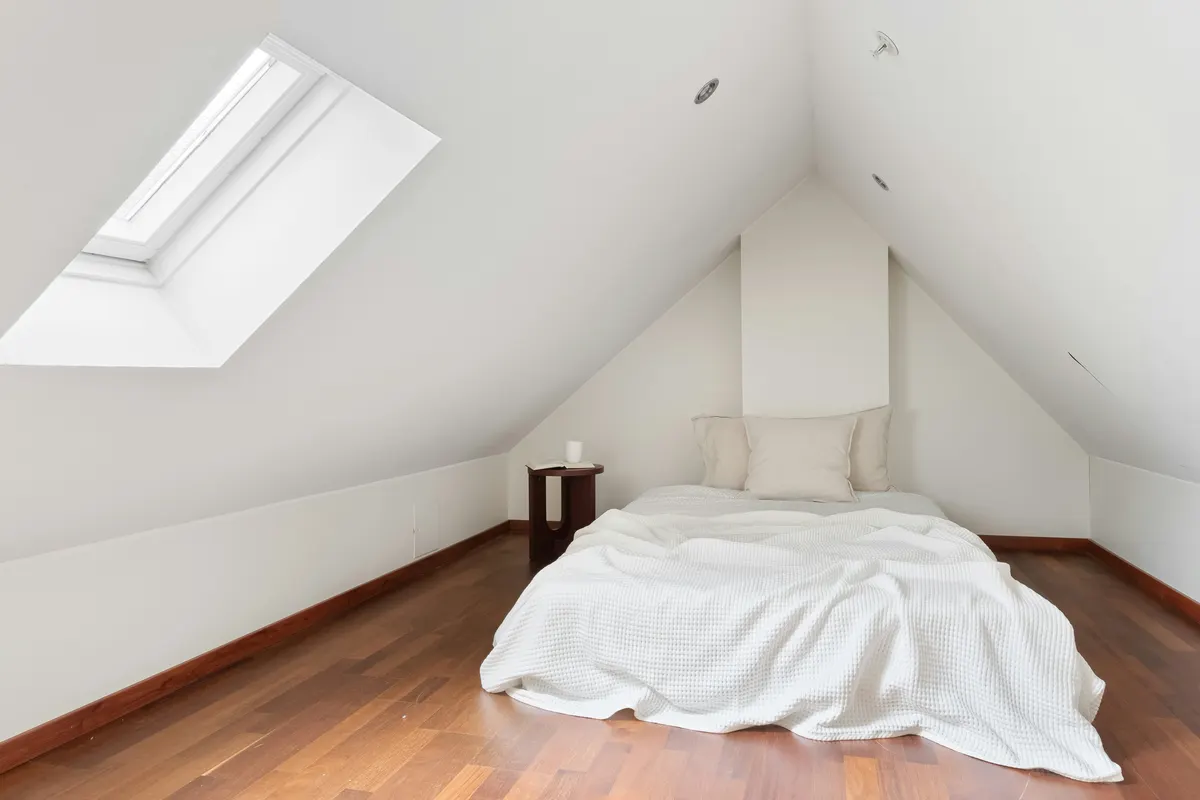
Loft rooms freezing in winter and hot in summer? We insulate sloping ceilings, dormers, knee walls and the small loft spaces around them as one connected job.
Learn more
Black mould removed, condensation and damp investigated, then ventilation, extractor fans, PIV and anti-mould coatings fitted so the problem stops coming back.
Learn more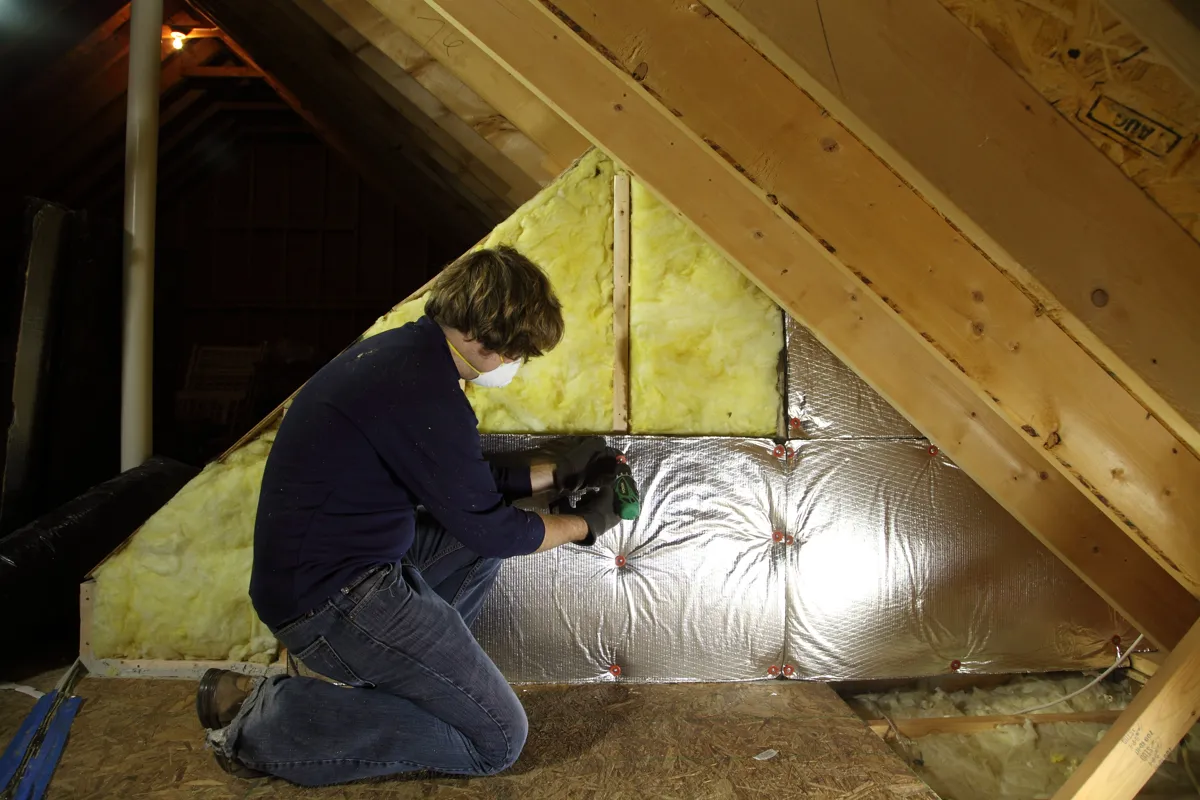
Old insulation removed, new mineral wool laid to around 270 to 300mm, then a raised storage floor, ladder and hatch fitted so the loft works properly.
Learn moreEcoBuild Contractors
Chat with us on WhatsApp
Hi there 👋
Send us a message or a few photos of the job and we will come back to you with a free quote.
We value your privacy
We use cookies to make this website work. With your consent we also use analytics cookies to see how people use the site, and advertising cookies to measure our ads. You can accept all, reject all or choose which ones to allow, and change your mind at any time. Cookie policy
Privacy preference centre
Choose which cookies we can use. Strictly necessary cookies are always on because the site cannot work without them. Your choice is saved on this device.
Remember your cookie choice. No tracking.
Google Analytics counts visits and shows which pages help people, so we can improve the site.
Google Ads measures whether our adverts lead to enquiries. Only used if you allow it.