
Bathroom and toilet extractor fans
Quiet axial or centrifugal fans for bathrooms, en suites and WCs, ducted to the outside through the wall, ceiling or roof.
Home / Services / Damp Proofing & Ventilation / Home Ventilation & PIV
Home ventilation fitted to suit the way your property is used, from humidistat bathroom fans to loft-mounted Positive Input Ventilation that freshens the whole house.
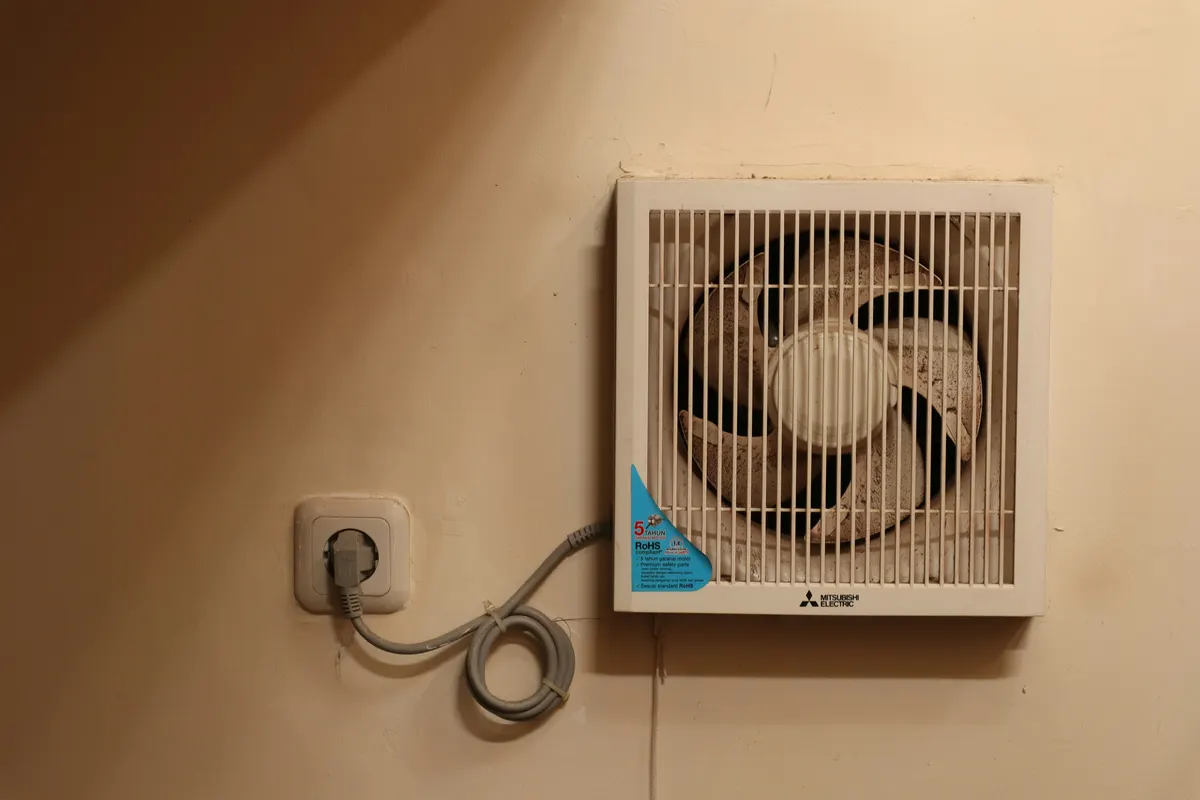
Every property needs a steady supply of fresh air and a way to remove moist, stale air from kitchens and bathrooms. Without it, condensation, mould and lingering cooking smells follow. We design and install home ventilation for houses, flats and commercial premises, choosing between extractor fans, humidistat fans, continuous running fans and Positive Input Ventilation based on the layout of the building and the problems you are seeing.
Many older fans are noisy, underpowered or wired so they only run while the light is on, which is rarely long enough to clear the steam from a shower. Replacing them with a correctly sized fan on a humidistat or overrun timer often makes a noticeable difference within days. Where condensation is spread right through the house, a PIV unit in the loft can be the simplest answer.
Fitting a bathroom fan is electrical work in a special location, so it is carried out by competent, qualified electricians with certification provided where applicable. We size every fan to the extract rates in Building Regulations Approved Document F, and your free quotation explains which system we recommend for each room and why we think it suits your home.
Quiet axial or centrifugal fans for bathrooms, en suites and WCs, ducted to the outside through the wall, ceiling or roof.
Wall and window fans for kitchens without a ducted cooker hood, sized to clear steam and cooking smells where they are produced.
Fans with a built-in humidity sensor that start automatically when moisture rises and keep running until the room has cleared, with no switch to remember.
Windows without background ventilation can be fitted with slot vents in the frame, giving each room a small, constant supply of fresh air even with the windows shut.
Low-energy fans that tick over quietly all day and boost when the room is in use, a good choice for flats and internal bathrooms.
A PIV unit draws in fresh air, filters it and gently feeds it into the home, diluting damp air and reducing condensation on windows and walls.
The usual type for houses: the unit sits in the loft with a ceiling diffuser on the landing, and many models include a small heater for colder days.
Where there is no loft, a wall-mounted unit supplies filtered fresh air into the flat through an outside wall.
We look at the construction, how many people live there and where moisture builds up, then plan extract, background ventilation and PIV together rather than room by room.
Removing moisture where it is produced stops it drifting through the house and settling on cold walls and windows.
Cooking smells, stale air and fumes from cleaning products and new furniture are diluted and cleared more quickly.
Modern low-energy fans and PIV units use little electricity, and humidistat and continuous models only boost when they need to.
Humidity sensing and continuous low-speed running mean the system does its job whether or not anyone remembers to switch it on.
Approved Document F, the part of the Building Regulations that deals with ventilation, sets minimum extract rates for each type of room. For intermittent fans it asks for 15 litres per second in a bathroom, 6 litres per second in a toilet, and 60 litres per second in a kitchen, or 30 litres per second where the extract is a cooker hood over the hob. Continuous running fans work to lower rates because they never switch off.
Those figures are what the fan must achieve once it is installed, not the number printed on the box. Long or flexible duct runs, tight bends and outside grilles all reduce airflow, so we choose a fan with enough power to meet the rate through the ducting it will actually be connected to.

PIV works best where condensation appears in several rooms, especially on bedroom windows, and where the home is reasonably airtight. Because the unit gently pressurises the house, damp air is pushed out through the natural gaps in the building instead of settling on cold surfaces. It does not replace kitchen and bathroom extract, which is still needed to remove steam at the source.
It is less suited to very draughty buildings or homes with open chimneys, where the supplied air simply escapes. During the survey we look at how the house is built and lived in, and if PIV is not the right answer we will say so.
Loft-mounted units draw air from the loft, which is usually a little warmer than outside, and many have a heater that takes the chill off incoming air on cold days. Once set up correctly, most people notice fresher air rather than a draught.
Yes. The fan can be ducted through the ceiling and loft to a roof or soffit vent, or an inline fan can be mounted in the loft with a ceiling grille in the bathroom.
It depends on the model and how dusty the loft is. We give you the manufacturer's recommended interval for your unit at handover and show you how to check the filter.
If your fan is noisy, slow or leaves the mirror steamed up long after a shower, a modern humidistat or continuous fan will usually clear the room faster and more quietly.
In most houses a fan is minor work that does not need planning permission. Listed buildings, properties in conservation areas and leasehold flats may need consent from the council or freeholder, so check before work starts.
Tell us a little about your property and the work you need. Add a few photos if you can, it helps us give you an accurate price sooner.

Black mould removed, condensation and damp investigated, then ventilation, extractor fans, PIV and anti-mould coatings fitted so the problem stops coming back.
Learn more
Felt lap, eaves, soffit and roof vents fitted to keep air moving through the roof space and stop condensation, mould and wet insulation.
Learn more
Damp surveys that find the real cause, then the right fix: damp proof course injection, penetrating damp repairs, replastering and cellar tanking for homes and businesses.
Learn moreEcoBuild Contractors
Chat with us on WhatsApp
Hi there 👋
Send us a message or a few photos of the job and we will come back to you with a free quote.
We value your privacy
We use cookies to make this website work. With your consent we also use analytics cookies to see how people use the site, and advertising cookies to measure our ads. You can accept all, reject all or choose which ones to allow, and change your mind at any time. Cookie policy
Privacy preference centre
Choose which cookies we can use. Strictly necessary cookies are always on because the site cannot work without them. Your choice is saved on this device.
Remember your cookie choice. No tracking.
Google Analytics counts visits and shows which pages help people, so we can improve the site.
Google Ads measures whether our adverts lead to enquiries. Only used if you allow it.